A Szigligeti Színház
2026/2027-es évada
.png)
.png)

.png)
Évadnyitó
.png)
Tisztelt Közönségünk! Színházszerető Nagyváradiak, és mindazok, akik a következő évadtól csatlakoznak közösségünkhöz! A nagyváradi Szigligeti Színház 125 éves jubileumi, ünnepi évadát követően új fejezetet nyitunk. Nem feledve mindazt, amit ez a gazdag múlt jelent számunkra, gondolatainkat már az előttünk álló feladatokra és újabb jelen idejű és jövőbe mutató találkozásokra irányítjuk. Egy színház történetét nemcsak az elmúlt évtizedek írják. Tovább él minden új bemutatóval, minden felgördülő függönnyel, és minden színházi élménnyel, melyet a Nézővel összefonódva, estéről - estére közösen hozunk létre. A színház hangját mindannyian másképpen értjük, értelmezzük, de igyekszünk befogadni, hazavinni, mesélni erről másoknak. Jó nagykövetekként visszük a hírét. Az új évadban, ha egy kívánságom lehetne, azt szeretném, hogy minél több Nagykövete, Hírvivője legyen a mi Szigligetinknek, színészeinknek, táncosainknak, bábosainknak és főként az általuk létrehozott előadásoknak. Vigyék jó hírét mind a már elismert, mind a pályájukon most induló alkotóknak. Legyen tere Nagyvárad a Nagy Lehetőségeknek, Együttműködéseknek, a Nagy Találkozásoknak, és a Nagy Álmok megvalósulásának. A 2026/27-es évadban társulataink: a Szigligeti Társulat, a Lilliput Társulat és a Nagyvárad Táncegyüttes más-más formanyelven, de ugyanazzal a kíváncsisággal keresi mindazt, ami bennünket, mai embereket foglalkoztat. Az új évad műsorában lesznek klasszikus művek, kortárs történetek, zenés produkciók, gyermek- és ifjúsági előadások, táncszínházi előadások. Leszünk vidámak, de lesz alkalmunk elcsendesedni, rácsodálkozni valamire, amit már rég tudunk, csak valahogy elfelejtettük, és reményeink szerint lesz miről beszélgetni az előadások után, ezáltal is tovább éltetni azokat. Igen, a közösen létrehozott élmény utóélete. Ez az, ami élteti a színházat! Köszönjük, hogy ebben részt vállalnak és elkötelezett Nagyköveteink, Hírnökeink lesznek ebben az évadban is! Számunkra, ugyanis a színház nem ér véget a legördülő függönnyel. Fontos, hogy jelen legyünk Nagyvárad és a régió kulturális életében, hogy eljussunk azokhoz is, akik nem tudnak minden alkalommal eljönni hozzánk. Fontosnak tartjuk, hogy a legfiatalabb generációk számára is természetes legyen: a Színházban, Bábszínházban nekik is van Helyük. Fontos továbbá, hogy vendégeket fogadjunk, fesztiválok keretében találkozzunk alkotókkal és újabb közönségréteggel, és újabb szakmai kapcsolatok megteremtésével erősítsük meg azt a Műhelyt, amit mi egyszerűen csak Szigligetinek nevezünk. Az elmúlt évad sikerei és szakmai visszajelzései megerősítettek bennünket abban, hogy érdemes keresni, kísérletezni és új utakat választani. De a legfontosabb visszajelzés továbbra is az, amikor megtelik a nézőtér. Amikor együtt figyelünk, együtt nevetünk, és az előadás végén egyként tapsolunk. Ezért az új évad kezdetén nemcsak előadásokat szeretnék ajánlani, hanem virtuális meghívót küldök. Meghívást arra, hogy legyenek kíváncsiak velünk együtt. Fedezzék fel az új történeteket, térjenek vissza régi kedvenceikhez, hozzák el gyermekeiket, barátaikat, és töltsük meg újabb emlékekkel ezt a több mint 125 éves színházat. A függöny hamarosan felgördül. Mi készülünk. Szeretettel várjuk Önöket! Czvikker Katalin főigazgató RO: Stimați spectatori! Dragi orădeni iubitori ai teatrului și toți cei care ni se vor alătura în comunitatea noastră începând cu noua stagiune! După stagiunea aniversară și festivă dedicată împlinirii a 125 de ani ai Teatrului Szigligeti din Oradea, deschidem un nou capitol. Fără să uităm tot ceea ce înseamnă pentru noi acest trecut atât de bogat, ne îndreptăm deja gândurile către provocările care ne așteaptă și către noi întâlniri ancorate în prezent și orientate spre viitor. Istoria unui teatru nu este scrisă doar de deceniile care au trecut. Ea continuă cu fiecare nouă premieră, cu fiecare cortină care se ridică și cu fiecare experiență teatrală pe care o creăm împreună, seară de seară, într-o strânsă legătură cu Spectatorul. Cu toții înțelegem și interpretăm în mod diferit vocea teatrului, dar încercăm să o primim, să o luăm cu noi acasă și să le povestim și altora despre ea. Îi ducem vestea mai departe, asemenea unor buni ambasadori. Dacă aș putea avea o singură dorință pentru noua stagiune, mi-aș dori ca Szigligeti al nostru, actorii, dansatorii, artiștii păpușari și, mai ales, spectacolele create de aceștia să aibă cât mai mulți Ambasadori și Vestitori. Să ducă vestea bună atât despre creatorii deja consacrați, cât și despre cei aflați acum la început de drum. Fie ca Oradea să fie un spațiu al Marilor Oportunități, al Colaborărilor, al Marilor Întâlniri și al împlinirii Marilor Vise. În stagiunea 2026/27, trupele noastre – Trupa Szigligeti, Trupa Lilliput și Ansamblul de Dans Nagyvárad – vor căuta, fiecare prin propriul limbaj artistic, dar cu aceeași curiozitate, tot ceea ce ne preocupă pe noi, oamenii de astăzi. Programul noii stagiuni va cuprinde opere clasice, povești contemporane, producții muzicale, spectacole pentru copii și tineret, precum și spectacole de teatru-dans. Vom fi veseli, dar vom avea și prilejul să ne oprim pentru o clipă, să ne minunăm din nou în fața unui lucru pe care îl știm de mult, dar pe care, într-un fel, l-am uitat și, sperăm noi, vom avea despre ce vorbi și după spectacole, contribuind astfel la păstrarea vie a acestora. Da, este vorba despre ecoul experienței pe care o creăm împreună, despre ceea ce rămâne în sufletul nostru după spectacol. Acesta este lucrul care ține teatrul viu! Vă mulțumim că luați parte la toate acestea și că veți fi și în această stagiune Ambasadorii și Vestitorii noștri dedicați! Pentru noi, teatrul nu se termină odată cu lăsarea cortinei. Este important să fim prezenți în viața culturală a Oradiei și a regiunii, să ajungem și la cei care nu pot veni de fiecare dată la noi. Considerăm important ca și pentru cele mai tinere generații să fie ceva firesc: în Teatru și în Teatrul de Păpuși există un loc și pentru ei. Este, de asemenea, important să primim invitați, să ne întâlnim cu artiști și cu noi categorii de public în cadrul festivalurilor și să consolidăm, prin crearea unor noi legături profesionale, acel Atelier artistic pe care noi îl numim, pur și simplu, Szigligeti. Succesele și reacțiile profesionale din stagiunea trecută ne-au întărit convingerea că merită să căutăm, să experimentăm și să alegem drumuri noi. Dar cel mai important feedback rămâne același: momentul în care sala se umple. Atunci când privim împreună, râdem împreună, iar la finalul spectacolului aplaudăm la unison. De aceea, la începutul noii stagiuni, nu vreau doar să vă recomand spectacole, ci vă trimit o invitație virtuală. O invitație de a fi curioși împreună cu noi. Descoperiți povești noi, reveniți la vechile dumneavoastră favorite, aduceți-vă copiii și prietenii și să umplem împreună acest teatru, vechi de peste 125 de ani, cu noi amintiri. Cortina se va ridica în curând. Noi ne pregătim. Vă așteptăm cu drag! Czvikker Katalin Manager EN: Dear Spectators! Dear Oradeans who love theatre, and all those who will join our community starting with the new season! Following the festive anniversary season celebrating the 125th anniversary of the Szigligeti Theatre in Oradea, we are opening a new chapter. Without forgetting everything that this rich past means to us, our thoughts are already turning towards the challenges that lie ahead and towards new encounters rooted in the present and looking towards the future. The history of a theatre is not written only by the decades that have passed. It continues with every new premiere, with every curtain that rises, and with every theatrical experience that we create together, evening after evening, in close connection with our Audience. We all understand and interpret the voice of theatre differently, but we strive to embrace it, take it home with us, and tell others about it. We carry its message forward, like good ambassadors. If I could have one wish for the new season, it would be for our Szigligeti, our actors, dancers and puppeteers, and above all, the performances they create, to have as many Ambassadors and Messengers as possible. May they spread the good word about both established creators and those who are just beginning their careers. May Oradea be a place of Great Opportunities, Collaborations, Great Encounters and the fulfilment of Great Dreams. In the 2026/27 season, our companies – the Szigligeti Company, the Lilliput Company and the Nagyvárad Dance Ensemble – will explore, each through a different artistic language but with the same curiosity, everything that concerns and engages us, the people of today. The new season’s programme will include classical works, contemporary stories, musical productions, performances for children and young audiences, as well as dance theatre productions. We will be joyful, but we will also have opportunities to become quiet and reflective, to marvel once again at something we have known for a long time but somehow forgot. And, we hope, there will be much to talk about after the performances, allowing them to continue living on in our memories. Yes, it is about the echo of the experience we create together, about what remains in our hearts after the performance. This is what keeps theatre alive! Thank you for taking part in this and for being our dedicated Ambassadors and Messengers this season as well! For us, theatre does not end when the curtain falls. It is important for us to be present in the cultural life of Oradea and the region, and to reach those who cannot come to us every time. We believe it is important that, even for the youngest generations, it should feel natural that there is a place for them in the Theatre and in the Puppet Theatre as well. It is also important for us to welcome guests, to meet artists and new audiences through festivals, and to strengthen, by creating new professional connections, the artistic workshop that we simply call Szigligeti. The successes and professional feedback of the past season have strengthened our belief that it is worth searching, experimenting and choosing new paths. But the most important feedback remains the same: when the auditorium is full. When we watch together, laugh together, and, at the end of the performance, applaud as one. That is why, at the beginning of the new season, I would like not only to recommend performances to you, but also to send you a virtual invitation. An invitation to be curious together with us. Discover new stories, return to your old favourites, bring your children and friends, and let us fill this theatre, which is more than 125 years old, with new memories. The curtain will rise soon. We are getting ready. We look forward to welcoming you! Czvikker Katalin Manager

Czvikker Katalin
Főigazgató
Manager

Novák Eszter
Művészeti vezető
Director artistic
Artistic Director
A Szigligeti Társulat tagjai a 2026-2027-es évadban | Membrii Trupei Szigligeti în stagiunea 2026–2027 | Members of the Szigligeti in the 2026–2027 season Művészeti vezető | Director artistic | Artistic Director Novák Eszter Színművészek | Actori | Actors Balogh Attila Barabás Hunor Csatlós Lóránt Dimény Levente Firtos Edit Fodor Réka Hajdu Géza Hunyadi István Kiss Csaba Kocsis Anna Kocsis Gyula Kovács Enikő Ifj. Kovács Levente Máthé Barbara Molnár Júlia Nagy László Zsolt Scurtu Dávid Sebestyén Hunor Szabó Eduárd Szigyártó Johanna Szotyori József Tasnádi-Sáhy Noémi Tóth Tünde Tőtős Ádám Trabalka Cecília Díszlet- és jelmeztervező | Scenograf | Designer Florina Bellinda Vasilatos Korrepetitor | Corepetitor | Repetiteur Dombi Dávid Súgó | Sufleur | Prompter Țentea Katalin Ügyelők | Regizori tehnici | Stage managers Joó Emília Lațcu Katalin Művészeti titkárok | Secretari artistici | Artistic Secretaries Fazakas Márta Fekete Enikő Fülöp Barbara Kádár Claudia Erika Közönségszervező | Organizator | Organizer Miklós Irén Jegypénztáros | Casieră | Ticket Clerk Cseke Enikő Levéltáros | Arhivar | The archivist Váradi Boglárka Műszaki vezető | Șef serviciu | Technical Manager Golicza Előd Díszítők | Montatori decoruri | Set dressers Gantner Attila Kincses Roland Komáromi Sándor Lőrincz Attila Imre Nemes Lajos Tamás Tibor Világosítók | Operatori de iluminat | Lighting operators Kosocki-Bódis Gergő Nagy Imre Nosz Tamás Hangosítók | Operatori de sunet | Sound operators Tóth Gábor Zsurka József Kellékes | Recuzitor | Props master Székely Emese Kiss-Bíró Ákos Öltöztetők | Costumieri | Dressers Bátori Amanda Domian Henrietta Fodrász | Peruchier | Hairdresser Czégényi-Ghent Adrienn Műhelyek | Ateliere | Workshops Szűcs László Tóth Sándor Varga Zsolt Technikai-adminisztratív igazgató | Director Tehnic și Administrativ | Technical and Administrative Director Berényi Zsolt Adminisztráció | Administrație | Administration Andrási Natália-Bianca Fekete Zsolt Lőrincz Ágnes Irén Lukács Anette Nagy Enikő-Klára Sebestyén Angéla Szabó Attila Zsigmond Szeleczki Zsuzsanna Taussig László Viezer Emese Sofőr | Șofer | Driver Lovas János Ültetők | Plasator | Usher Füstös Krisztina Lascu Marina Szabó Silvia Portaszolgálat | Serviciu poartă | Reception Chirai Marius Ioan Kalló János Kór Imre Varga Gyula Veres László

A Nagyvárad Táncegyüttes tagjai a 2026-2027-es évadban | Membrii Ansamblului Nagyvárad în stagiunea 2026–2027 | Members of the Nagyvárad Dance Ensemble in the 2026–2027 season Tagozatvezető | Coordonator de secție | Section Leader Kerekes Dalma Gabriella Tánckarvezető | Coordonator de dans | Dance Leader Barkóczi Réka Táncművészek | Dansatori | Dancers Barabás Hunor Berencsi Pál Farkas Regő László Fodor Virág Forgács-Popp Jácint Györfi Csaba koreográfus m.v. Imre Béla Krupár Luca Ördögh Géza Szabó József Tábori Sára Tóth Hanna Törteli Nadin m.v. Közönségszervező | Organizator | Organizer Antal Fórizs Sára Jelmeztervező | Designer de costume | Costume Designer Cristina Breteanu m.v. Hangmérnök | Operator sunet | Sound operator Jónucz Gábor Ügyelő-öltöztető | Regizor technic-costumier | Technical director-dressers Kerekes Emma Fénytechnikus | Operator lumini | Lighting operator Lázár Attila

Kerekes Dalma Gabriella
Tagozatvezető
Sef de secție
Section Leader


Botházy-Daróczi Réka
Művészeti igazgató
Director artistic
Artistic Director
A Lilliput Társulat tagjai a 2026-2027-es évadban | Membrii Trupei Lilliput în stagiunea 2025-2026 | Members of the Lilliput in the 2025-2026 season Művészeti igazgató | Director artistic | Artistic Director Botházy-Daróczi Réka Bábművészek | Artiști păpușari | Puppet artists Csepei Róbert Daróczi István Duna Orsolya Hanyecz-Debelka Róbert Lélek Sándor Tibor Németi Emese Oláh Anikó Katalin Szatmári Noémi Szentpéteri Lenke Stéfán Bodor Mária Korrepetitor | Corepetitor | Repetiteur Varga Imre Közönségszervező | Organizator | Organizer Boross Tamás Díszítő | Montator decoruri | Det dresser Dézsi László Referens | Referent | Officer Hanyecz-Debelka Mária Hangmérnök | Operator sunet | Sound operator Haraji Adalbert Ültető | Plasator | Usher Haraszti Kázmér Erzsébet Műszaki vezető, fénytechnikus | Sef serviciu, operator lumini | Technical Managaer, Lighting Operator Vajna Tibor Ügyelő | regizor tehnic | Stage manager Varga Friderika
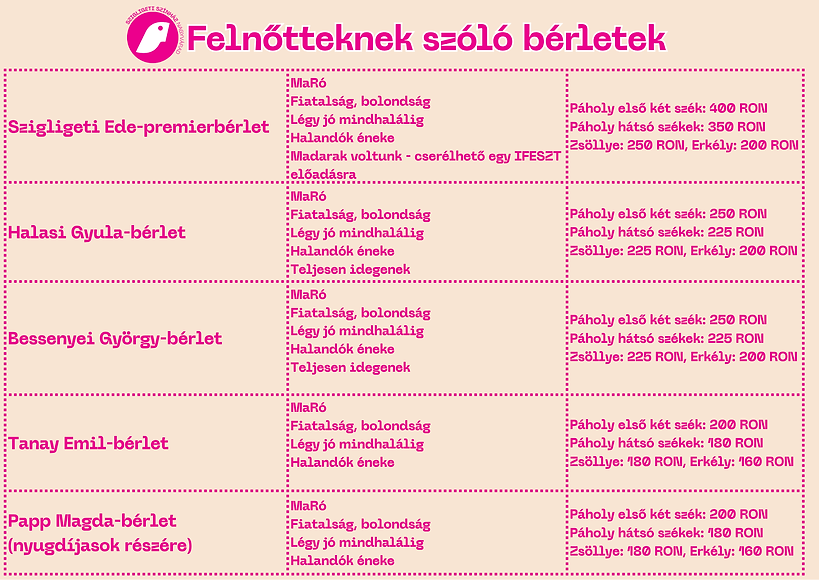
BÉRLETKÍNÁLATUNK
OFERTA DE ABONAMENTE
SEASON TICKET OFFERS
.png)
.png)
.png)
.png)
A SZIGLIGETI TÁRSULAT BEMUTATÓI
Premierele Trupei Szigligeti
Premieres of the Szigligeti Company
Darvas Benedek - Pintér Béla
Parasztopera | OPERĂ ȚĂRĂNEASCĂ | PEASANT OPERA
Balladisztikus történet opera formában | O baladă în formă de operă | A Ballad in Operatic Form

Rendező:
Balogh Attila
Egy kevesebb, mint másfél órás gyorsutazás egy falusi család, Balogék életének egyik legviharosabb napján. Ez az a nap, amikor az ifjú Roland házasodni készül, mit sem sejtve arról, hogy pár perc alatt teljesen meg fog változni az élete. Nem azért, mert elveszi a közös gyermekükkel várandós Etelkát úgy, hogy közben szerelmes a saját mostohanővérébe... Hanem mert olyan titkokra derül fény, amelyek gyökerestől felforgatják két család életét. Ebben a váratlan fordulatokkal teli, vérbő humorú, kortárs magyar operában a barokk zene a magyar népzenével ötvöződik. Ha kíváncsi arra, milyen, amikor az opera egyszerre meghökkentő, szívszorító és felszabadítóan mulatságos, ezt az előadást semmiképpen ne hagyja ki! Egyszerre kínál felejthetetlen színházi és zenei élményt. RO: O călătorie alertă de mai puțin de o oră și jumătate în una dintre cele mai tumultuoase zile din viața unei familii de la sat, familia Balog. Este ziua în care tânărul Roland se pregătește să se căsătorească, fără să bănuiască nicio clipă că viața lui se va schimba complet în doar câteva minute. Nu pentru că urmează să o ia de soție pe Etelka, însărcinată cu copilul lor, în timp ce el este îndrăgostit de propria sa soră vitregă... ci pentru că ies la iveală secrete care vor da peste cap din temelii viețile celor două familii. Plină de răsturnări de situație și de un umor savuros, această operă maghiară contemporană îmbină muzica barocă cu muzica tradițională maghiară. Dacă vreți să descoperiți cum este atunci când opera este în același timp surprinzătoare, sfâșietoare și eliberator de amuzantă, nu ratați acest spectacol! Oferă deopotrivă o experiență teatrală și muzicală de neuitat. EN: A fast-paced journey of less than an hour and a half into one of the most turbulent days in the life of a rural family, the Balogs. This is the day when young Roland is about to get married, completely unaware that his life is about to change in a matter of minutes. Not because he is marrying Etelka, who is expecting their child, while being in love with his own stepsister... but because secrets are about to come to light that will turn the lives of two families upside down. Full of unexpected twists and darkly exuberant humour, this contemporary Hungarian opera blends Baroque music with Hungarian folk music. If you are curious to experience an opera that is at once shocking, heartbreaking and liberatingly funny, do not miss this production! It offers an unforgettable theatrical and musical experience in equal measure.
Transilvania Színpad
Sala Transilvania | Transilvania Stage
MARÓ | MARO | MARO
Székely Csaba
A magyar és román társulat rég várt találkozását egy közös színpadon: Bobi Pricop, generációja egyik legelismertebb román rendezője állítja színpadra a Szigligeti Színház és a Teatrul Regina Maria első koprodukcióját. Székely Csaba kétnyelvű, elementáris erejű szatírája groteszk jelenetfüzérben mutatja meg a magyar–román együttélés abszurditásait. Történelmünk, identitásunk, kulturális különbözőségeink és makacs előítéleteink egyszerre válnak felszabadító nevetés és fájdalmas felismerés forrásává. A cím a magyar és a román szavak első szótagjából születik, és találóan jelöli azt a közeget, ahol a közös múlt, a sérelmek és a humor elválaszthatatlanul összefonódnak. RO O întâlnire de mult așteptată între cele două teatre, pe aceeași scenă: Bobi Pricop, unul dintre cei mai apreciați regizori români ai generației sale, montează prima coproducție a Teatrului Szigligeti și a Teatrului Regina Maria. Satira bilingvă, de o forță aparte, a lui Csaba Székely dezvăluie absurditățile conviețuirii româno-maghiare printr-o suită de scene grotești. Istoria, identitățile, diferențele culturale și prejudecățile noastre adânc înrădăcinate devin, deopotrivă, surse ale unui râs eliberator și ale unei dureroase conștientizări. Titlul este alcătuit din primele silabe ale cuvintelor maghiar și român și surprinde sugestiv un spațiu în care trecutul comun, nemulțumirile și umorul se împletesc în mod inseparabil. EN A long-awaited encounter between the Hungarian and Romanian companies on a shared stage: Bobi Pricop, one of the most acclaimed Romanian directors of his generation, stages the first co-production of Szigligeti Theatre and Teatrul Regina Maria. Csaba Székely’s powerful bilingual satire reveals the absurdities of Hungarian–Romanian coexistence through a series of grotesque scenes. Our history, identities, cultural differences and deeply rooted prejudices become, at once, sources of liberating laughter and painful recognition. The title is formed from the first syllables of the Hungarian and Romanian words, aptly capturing a world in which shared history, grievances and humour are inseparably intertwined.
Szigligeti Színház, Nagyterem
Sala Mare | Main Stage

Rendező:
Bobi Pricop
Smaranda Nicolau
A HAZA SÓLYMAI | ȘOIMII PATRIEI | FLIGHT 2411
Thriller, igaz történet, kortárs színház | Thriller, poveste reală, teatru contemporan | Thriller, true story, contemporary theatre

Rendező:
Ioana Păun
Vannak történetek, amelyek túlságosan valószínűtlenek ahhoz, hogy kitaláltak legyenek. 1971. májusában Moka Adalbert eltérített egy TAROM-repülőgépet, utasaival, a másodpilótával és a távírásszal együtt, majd megszökött a kommunista Romániából. A HAZA SÓLYMAI tizenöt emlékezetes jelenetben idézi meg Moka életének történetét, mindegyik pontosan azt a pillanatot ragadja meg, amikor minden megváltozik. A gyengéd, felkavaró, abszurd módon humoros és meglepően bensőséges jelenetek egy igaz történetbe kalauzolják a nézőt, amelyben minden egyes jelenet újabb kérdést vet fel, és melyből kiderül: a menekülés nem egyenlő a szabadsággal. RO Unele povești sunt prea improbabile ca să fie ficțiune. În Mai 1971, Adalbert Moka a deturnat un avion Tarom cu tot cu pasageri, copilot și telegrafist și a fugit din România comunistă. ȘOIMII PATRIEI recompune povestea vieții sale prin cincisprezece tablouri memorabile, fiecare surprins în clipa exactă în care totul se schimbă. Tandre, tulburătoare, absurd de amuzante și surprinzător de intime, aceste imagini îi invită pe spectatori să pătrundă într-o poveste adevărată, în care fiecare cadru deschide o nouă întrebare, iar libertatea se dovedește mult mai greu de atins decât evadarea. EN Some stories are too improbable to be fiction. In 1971, Adalbert Moka hijacked a Tarom aircraft, together with its passengers, copilot and telegraphist, and escaped Communist Romania. FLIGHT 2411 reconstructs his life through fifteen unforgettable tableaus, each frozen at the exact moment everything changes. Tender, unsettling, darkly funny and unexpectedly intimate, the performance invites audiences to step inside a true story where every image raises a new question, and where freedom proves far more elusive than escape.
Transilvania Színpad
Sala Transilvania | Transilvania Stage
Eisemann Mihály - K. Halász Gyula - Kellér Dezső
FIATALSÁG, BOLONDSÁG | TINEREȚE, NEBUNIE | The Folly of Youth
Zenés vígjáték | Comedie muzicală | Musical comedy
Bán Sándor, az ünnepelt sztárénekes - rajonganak érte a nők. Bakfisok, kisasszonyok és érett asszonyok. Vajon ki nyeri el szerelmét? Babszi a habos süteményért is rajong! Jaj, de jó! Ám hirtelen felbukkan Dodó! Mindig és mindenhol. És a dolgok jól összezavarodnak! De hát ez a dolguk! Kéményseprők, bonyodalmak. Tekeklub. Fűszer és Csemege! Sláger sláger hátán, míg végül minden kisimul. Elvégre: Szerelemhez nem kell más, csak szerelem kell és kész! RO Bán Sándor, îndrăgitul cântăreț-vedetă – femeile sunt înnebunite după el. Adolescente, domnișoare și femei mature. Oare cine îi va cuceri inima? Babszi este înnebunită chiar și după prăjiturile cu frișcă! Vai, ce bine! Dar, dintr-odată, apare Dodó! Mereu și peste tot. Iar lucrurile se încurcă zdravăn! Până la urmă, acesta este rostul lor! Coșari, încurcături. Club de bowling. Condimente și Delicatese! Hit după hit, până când, în cele din urmă, toate lucrurile se așază. Doar, până la urmă: pentru iubire nu ai nevoie de nimic altceva decât de iubire. Și gata! EN Sándor Bán, the celebrated star singer – women simply adore him. Teenage girls, young ladies and mature women. But who will win his heart? Babszi is crazy about cream-filled pastries, too! Oh, what a delight! But suddenly, Dodó appears! Always and everywhere. And things get thoroughly mixed up! But then again, that is what they are there for! Chimney sweeps, complications. A bowling club. Spices and Delicatessen! Hit after hit, until, finally, everything falls into place. After all: when it comes to love, all you need is love. And that's that!
Szigligeti Színház, Nagyterem
Sala Mare | Main Stage

Rendező:
Naszlady Éva

Móricz Zsigmond – Kocsák Tibor – Miklós Tibor
LÉGY JÓ MINDHALÁLIG! | FII BUN PÂNĂ LA MOARTE | BE FAITHFUL UNTO DEATH
Musical

Rendező:
Tóth Tünde
komédia
Móricz regénye elevenedik meg sok zenével, csodálatos tehetséges gyerekek és a Szigligeti Társulat művészeinek előadásában. Egy olyan mű, amely arra ösztönöz, hogy újraértékeljük, mi mennyit ér a felnőttek világában. Nyilas Mihály igazi lelkét akkor is őrzi, amikor a környező világ már semmi esélyt nem ad a jóságnak. RO: Romanul lui Móricz prinde viață cu multă muzică, cu copii extraordinar de talentați și prin interpretarea artiștilor Teatrului Szigligeti. O operă care ne îndeamnă să reevaluăm ce anume are cu adevărat valoare în lumea adulților. Mihály Nyilas își păstrează adevăratul suflet chiar și atunci când lumea din jur nu mai oferă nicio șansă bunătății. EN: Móricz's novel comes to life with plenty of music, wonderfully talented children, and the performance of the artists of the Szigligeti Theatre. It is a work that encourages us to reassess how much we are worth in the world of adults. Mihály Nyilas preserves his true soul even when the world around him no longer gives goodness any chance.
Szigligeti Színház, Nagyterem
Sala Mare | Main Stage
LILI BÁRÓNŐ | BAROANA LILI | BARONESS LILI
Huszka Jenő
Operett | Operetă | Operetta
Az operett a Monarchia világából született. Egy olyan társadalomból, ahol még természetesnek tűnt a bálok, kastélyok, rangok, katonatisztek és úri etikett rendszere, még ha ez a századfordulóra sokszor már inkább illúzió volt, mint valóság. A Lili bárónő története éppen ennek a világnak a megbillenését meséli el. Az idős Illésházy gróf halála után kiderül, hogy a családi birtokot teljesen felemésztették az adósságok. Az örökös, Illésházy László gróf kénytelen eladni a kastélyt és a birtokot a dúsgazdag Malomszegi bárónak, aki a polgárságból emelkedett fel, és így tervez grófi rangot vásárolni magának. Sok-sok bonyodalom után végül lehullanak az álruhák, a számtalan félreértés kibogódzódni látszik, minden titok napvilágra kerül, a konfliktusok feloldódnak, a régi, valamint az új társadalmi rend képviselői végül közelebb kerülnek egymáshoz, és győz a szerelem. Ezalatt felcsendülnek Huszka Jenő máig ismert dallamai, a Cigaretta-keringő, a Gyere csókolj meg, szaporán, tubicám, a Tündérkirálynő, légy a párom és sok más ikonikus sláger. Egy világ zenei lenyomatai, amely talán már eltűnt, dallamai azonban tovább csengenek a fülünkben. De vajon meddig élhet tovább egy világ, ha már csak a színpadon létezik? És mit kezdünk ma azzal a műfajjal, amely ebből a világból született? Képes-e úgy alkalmazkodni egy másik korhoz, hogy közben ne veszítse el önmagát? Miközben a történet szereplői új helyet keresnek maguknak egy átalakuló társadalomban, óhatatlanul felmerül a kérdés: vajon maga az operett is hasonló út előtt áll? RO Opereta s-a născut în lumea Monarhiei Austro-Ungare. Într-o societate în care balurile, castelele, rangurile, ofițerii și codul etichetei aristocratice păreau încă firești, chiar dacă, la începutul secolului, toate acestea deveniseră adesea mai degrabă o iluzie decât o realitate. Povestea operetei „Baroana Lili” surprinde tocmai momentul în care această lume începe să-și piardă echilibrul. După moartea bătrânului conte Illésházy, se descoperă că domeniul familiei a fost complet înghițit de datorii. Moștenitorul, contele László Illésházy, este nevoit să vândă castelul și domeniul bogatului baron Malomszegi, un om ridicat din rândurile burgheziei, care intenționează astfel să-și cumpere un titlu de conte. După nenumărate complicații, măștile cad în cele din urmă, numeroasele neînțelegeri încep să se limpezească, toate secretele ies la iveală, conflictele se rezolvă, iar reprezentanții vechii și ai noii ordini sociale ajung, în cele din urmă, mai aproape unii de ceilalți. Iar iubirea triumfă. Între timp, răsună melodiile lui Jenő Huszka, cunoscute și astăzi: „Valsul țigării”, „Vino, sărută-mă, repede, porumbița mea”, „Regina zânelor, fii perechea mea” și multe alte șlagăre emblematice. Sunt amprentele muzicale ale unei lumi care poate a dispărut deja, dar ale cărei melodii continuă să răsune în urechile noastre. Dar cât timp poate supraviețui o lume atunci când mai există doar pe scenă? Și ce facem astăzi cu genul care s-a născut din acea lume? Poate oare să se adapteze unei alte epoci fără să-și piardă identitatea? În timp ce personajele poveștii își caută un nou loc într-o societate aflată în transformare, întrebarea se impune aproape inevitabil: oare opereta însăși nu se află în fața unui drum asemănător? EN Operetta was born out of the world of the Austro-Hungarian Monarchy. It emerged from a society in which balls, castles, titles, military officers and the codes of aristocratic etiquette still seemed perfectly natural, even though, by the turn of the century, they had often become more illusion than reality. The story of “ Baroness Lili” captures precisely the moment when this world begins to lose its balance. Following the death of the elderly Count Illésházy, it is revealed that the family estate has been completely consumed by debt. The heir, Count László Illésházy, is forced to sell the castle and the estate to the immensely wealthy Baron Malomszegi, a man who has risen from the bourgeoisie and now intends to use his fortune to purchase a noble title for himself. After countless complications, the disguises eventually fall away, the many misunderstandings begin to unravel, every secret comes to light, and the conflicts are resolved. Representatives of the old and the emerging social order gradually move closer to one another – and love triumphs. Meanwhile, the melodies of Jenő Huszka ring out: the “Cigarette Waltz,” “Come and Kiss Me Quickly, My Little Dove,” “Fairy Queen, Be My Partner,” and many other iconic hits. They are the musical imprints of a world that may already have vanished, yet whose melodies continue to linger in our ears. But how long can a world survive once it exists only on stage? And what do we make today of the genre that was born from that world? Can it adapt to another era without losing its identity? As the characters in the story search for a new place for themselves within a society undergoing profound change, an inevitable question arises: is operetta itself facing a similar journey?
Transilvania Színpad
Sala Transilvania | Transilvania Stage
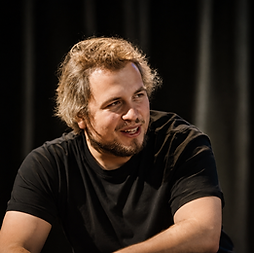
Rendező:
Dögei Mátyás
HALANDÓK ÉNEKE | CÂNTECUL MURITORILOR | MORTALS’ SONG
Sorstöredékek Euripidész tragédiáiból | Fragmente despre destin în tragediile lui Euripide | Fragments of Fate from Euripides’ Tragedies

Rendező:
Novák Eszter
„Nincs olyan szenvedés, nincs olyan isteni csapás, nincs olyan szégyen, amelyet az emberi természet ne volna képes elhordozni.” - mondja Euripidész az Oresztész elején. Mi marad az emberből, amikor a győztesek sem győztesek többé? Amikor a múlt teherként nehezedik a következő nemzedékre? Amikor az istenek hallgatnak, a régi bizonyosságok megrendülnek, és a hősök helyén törékeny emberek állnak? Euripidész drámái egy addig biztosnak hitt, de már felbomló világrend idején születtek. Nem a dicsőségről beszélnek, hanem annak áráról, amelyet a túlélőknek és a következő nemzedékeknek kell megfizetniük. A hazatérés lehetetlenségéről. Az örökölt bűnökről. A bizalom elvesztéséről. Az Oresztész lesz ennek az előadásnak a szíve. Köréje olyan sorsok gyűlnek, amelyek a Trójai nők, a Hekabé, az Iphigeneia és más Euripidész-drámák világából érkeznek. Nem egyetlen történetet mesélnek el, hanem egymásba kapaszkodó emberi töredékeket: anyákét, gyermekekét, hazatérőkét, száműzöttekét. A Halandók éneke olyan előadás, amely kérdéseket tesz fel egy olyan korban, amikor újra megtapasztaljuk, milyen könnyen kicsúszhat alólunk mindaz, amit biztosnak hittünk. Amikor a bizalom - egymásban, a közösségben, a jövőben - törékennyé válik. Mibe kapaszkodhatunk vajon, mi halandók? RO „Nu există suferință, nu există nenorocire trimisă de zei, nu există rușine pe care firea omenească să nu fie în stare să o îndure.” - spune Euripide la începutul lui Oreste. Ce rămâne din om atunci când nici învingătorii nu mai sunt învingători? Când trecutul apasă ca o povară asupra generațiilor care vin? Când zeii tac, vechile certitudini se clatină, iar în locul eroilor stau oameni fragili? Piesele lui Euripide s-au născut într-o epocă în care o ordine a lumii considerată până atunci sigură începea deja să se destrame. Ele nu vorbesc despre glorie, ci despre prețul acesteia, pe care supraviețuitorii și generațiile următoare sunt nevoite să îl plătească. Despre imposibilitatea întoarcerii acasă. Despre vina moștenită. Despre pierderea încrederii. Oreste va fi inima acestui spectacol. În jurul lui se adună destine care vin din lumile Troienelor, Hecubei, Ifigeniei și ale altor tragedii ale lui Euripide. Ele nu spun o singură poveste, ci fragmente de vieți omenești care se împletesc unele cu altele: ale mamelor, ale copiilor, ale celor întorși acasă, ale celor exilați. Cântecul muritorilor este un spectacol care pune întrebări într-o epocă în care trăim din nou experiența cât de ușor ne poate fugi de sub picioare tot ceea ce credeam că este sigur. Când încrederea - în ceilalți, în comunitate, în viitor - devine fragilă. De ce ne putem oare agăța noi, muritorii? EN “There is nothing so dreadful to speak of, no suffering or disaster sent by the gods, of which human existence might not take up the burden.” - Euripides, Orestes, lines 1–3. What remains of a human being when even the victors are no longer victorious? When the past weighs like a burden upon the generations to come? When the gods fall silent, old certainties begin to crumble, and fragile human beings stand where heroes once stood? Euripides’ plays were born in a time when a once seemingly secure world order was already beginning to unravel. They do not speak of glory, but of the price it demands - a price to be paid by the survivors and by the generations that follow. Of the impossibility of returning home. Of inherited guilt. Of the loss of trust. Orestes will be at the heart of this production. Around him gather stories of fate that come from the worlds of Euripides’ The Trojan Women, Hecuba, Iphigenia, and other plays. They do not tell a single story, but fragments of human lives intertwined with one another: those of mothers, children, returnees, and exiles. The Song of Mortals is a production that asks questions in an age when we once again experience how easily everything we believed to be certain can slip from beneath our feet. When trust — in one another, in our community, in the future - becomes fragile. What, then, can we, mortals, hold on to?
Transilvania Színpad
Sala Transilvania | Transilvania Stage
A NAGYVÁRAD TÁNCEGYÜTTES BEMUTATÓI
Premierele ansamblului de dans
Premieres of the Nagyvárad Dance Ensemble
Móricz Zsigmond azonos című regénye alapján
PILLANGÓ | FLUTURELE | BUTTERFLY
Néptáncszínházi előadás | Spectacol de teatru-dans folcloric | Folk dance theatre performance

Rendező:
Győrfi Csaba
A történet egy falusi kis közösség életébe enged betekintést, amelyet a szegénység és a szigorú társadalmi normák jellemeznek. Ebben a világban a házasság gyakran nem a szerelemről, hanem a megélhetésről és a vagyon tovább öröklődéséről szólt, a társadalmi elvárások pedig öröklött börtönként nehezednek a fiatalokra. Alföldi miliőben napszámos szegények nyelik a cséplőgép porát, ebben a nyomorult környezetben két fiatal egymásba szeret. Kivirágzik körülöttük a puszta. Szülők és ismerősök, szinte mindenki ellenzi szerelmüket, a legényt egy gazdag nővel kötött házasságának terhe nyomja. A Pillangó lírája a legnehezebb ponton teljesedik ki mikor a legény menyasszonya mellől leugrik a szekérről és az igaz szerelmet választja. Ez a mű az egyszerű emberek darabos nyelvén beszél a szegény fiatalok shakespeare-i szenvedélyű szerelméről. A történet a néptánc szimbolikáján keresztül bontakozik ki, ahol a lakodalmi forgatagok, a falusi mindennapokat bemutató munkadalok és az örömtáncok fokozatosan válnak egyre nyomasztóbbá. A férfiak és nők közötti táncjelenetekben először a paraszti világ szépsége és ereje jelenik meg: a csárdások lendülete, a páros forgásokban megbúvó szenvedély és a közösségi ünnepek pezsgése. Ahogy azonban a történet sötétebb vizekre evez, úgy változik meg a mozdulatok jelentése is. A zenei aláfestés a népdalok archaikus világából merít, ám eltorzított, sötét harmóniákkal egészül ki, amelyek mintha a múlt és a bűntudat szellemeit idéznék meg. Néptáncszínházi előadásunk a következő kérdésekre keresi a választ: Felvállalható-e a tiszta érzelem úgy is, hogy az szembeszegül mindenféle társadalmi normával? Mit veszítünk és mit nyerünk cserébe, ha vállaljuk önmagunkat és vállaljuk a mindenki által ellenzett szerelmet? RO: Povestea oferă o privire asupra vieții unei mici comunități rurale, caracterizate de sărăcie și de norme sociale stricte. În această lume, căsătoria era adesea mai puțin despre iubire, cât despre trai și transmiterea averii, iar așteptările societății apăsau asupra tinerilor ca o închisoare moștenită. În peisajul Câmpiei Ungare, zilierii săraci înghit praful mașinii de treierat. În acest mediu aspru și lipsit de speranță, doi tineri se îndrăgostesc. Câmpia înflorește în jurul lor. Părinții, rudele și aproape toți cei din jur se împotrivesc iubirii lor, iar tânărul este împovărat de obligația unei căsătorii cu o femeie bogată. Lirismul piesei Fluturele (Pillangó) atinge apogeul în momentul cel mai dramatic, când tânărul sare din căruță, părăsindu-și logodnica pentru a alege iubirea adevărată. Această operă vorbește, în limbajul direct și simplu al oamenilor de rând, despre iubirea a doi tineri săraci, o iubire de o pasiune demnă de Shakespeare. Povestea se desfășoară prin simbolistica dansului popular. Vârtejul nunților, cântecele de muncă ce evocă viața de zi cu zi a satului și dansurile bucuriei devin treptat tot mai apăsătoare. În scenele de dans dintre bărbați și femei se dezvăluie mai întâi frumusețea și forța lumii țărănești: avântul ceardașului, pasiunea ascunsă în rotirile perechilor și efervescența sărbătorilor comunității. Pe măsură ce povestea pătrunde în zone tot mai întunecate, se schimbă și semnificația mișcărilor. Acompaniamentul muzical își are rădăcinile în universul arhaic al cântecelor populare, dar este completat de armonii deformate și întunecate, care par să evoce spiritele trecutului și povara vinovăției. Spectacolul nostru de teatru-dans popular caută răspunsuri la următoarele întrebări: Poate fi asumată iubirea sinceră chiar dacă sfidează toate normele sociale? Ce pierdem și ce câștigăm atunci când avem curajul să fim noi înșine și să ne asumăm o iubire pe care toți ceilalți o condamnă? EN: The story offers a glimpse into the life of a small rural community shaped by poverty and strict social conventions. In this world, marriage was often less about love than about securing a livelihood and preserving family property, while society's expectations weighed upon the young like an inherited prison. Set on the Great Hungarian Plain, impoverished day labourers breathe in the dust of the threshing machine. In this harsh and unforgiving environment, two young people fall in love. The plain blossoms around them. Their parents, relatives, and almost everyone around them oppose their relationship, while the young man is burdened by the expectation of marrying a wealthy woman. The lyrical power of Butterfly (Pillangó) reaches its climax at the most dramatic moment, when the young man jumps from the cart, leaving his fiancée behind to choose true love. Written in the rugged yet expressive language of ordinary people, the play tells the story of two poor lovers whose passion is worthy of Shakespeare. The story unfolds through the symbolism of Hungarian folk dance. The whirl of wedding celebrations, work songs portraying everyday village life, and joyful dances gradually become increasingly oppressive. At first, the dance scenes between men and women reveal the beauty and strength of rural life: the vitality of the csárdás, the passion hidden within the couples' swirling movements, and the vibrant energy of communal festivities. As the story moves into darker waters, the meaning of these movements changes as well. The musical score draws on the ancient world of Hungarian folk songs, enriched by distorted, darker harmonies that seem to summon the spirits of the past and the burden of guilt. Our folk dance theatre production seeks answers to the following questions: Can pure love be embraced even when it defies every social convention? What do we lose, and what do we gain, when we dare to be ourselves and stand by a love that everyone else opposes?
Transilvania Színpad
Sala Transilvania | Transilvania Stage
GYŰJTÖTTEM ÉN, KALLOS ZOLTÁN | AM CULES EU, KALLÓS ZOLTÁN | I HAVE COLLECTED, KALLÓS ZOLTÁN
100 éve született Kallós Zoltán | Centenarul nașterii lui Kallós Zoltán |
The Centenary of Kallós Zoltán’s Birth
100 éve született Kallós Zoltán Kallós Zoltán gyűjtései ma is élő forrásai a néptáncnak és a népzenének. Páratlan hagyatékából évtizedek óta merítenek amatőr és hivatásos együttesek egyaránt – legyen szó autentikus előadásról vagy táncszínházi alkotásról. Ezt a felmérhetetlen gazdagságú örökséget lehetetlen egyetlen előadásban teljességében megidézni. Az alkotók ezért nem a teljességre törekednek, hanem arra, hogy Zoli bácsi számukra legkedvesebb táncos, zenei és énekes gyűjtéseiből válogassanak. Egy személyes utazásra hívnak bennünket, amelyet adatközlőkkel rögzített beszélgetések, balladák, szerelmes énekek és keservesek hangja sző át. Ami egykor Kallós Zoltán útjain született meg, az ma is tovább él a dalokban, a táncokban és az emlékezetben. Születésének 100. évfordulóján ezzel az előadással ezt az élő örökséget idézzük meg. RO 100 de ani de la nașterea lui Zoltán Kallós Colecțiile adunate de Zoltán Kallós rămân și astăzi surse vii pentru dansul și muzica tradițională. De zeci de ani, atât formațiile de amatori, cât și cele profesioniste își găsesc inspirația în moștenirea sa unică — fie pentru spectacole autentice, fie pentru creații de teatru-dans. Este imposibil ca bogăția inestimabilă a acestei moșteniri să fie evocată în întregime într-un singur spectacol. De aceea, creatorii nu își propun să cuprindă totul, ci aleg dintre materialele de dans, muzică și cântec care i-au fost cele mai dragi lui nea Zoli. Ne invită într-o călătorie personală, țesută din conversații înregistrate cu informatorii tradiționali, precum și din glasul baladelor, al cântecelor de dragoste și al doinelor. Ceea ce s-a născut odinioară de-a lungul drumurilor lui Zoltán Kallós continuă să trăiască și astăzi în cântece, în dansuri și în memorie. La împlinirea a 100 de ani de la nașterea sa, prin acest spectacol readucem în prim-plan această moștenire vie. EN 100 Years Since the Birth of Zoltán Kallós The collections of Zoltán Kallós remain living sources of folk dance and folk music to this day. For decades, amateur and professional ensembles alike have drawn from his unparalleled legacy — whether for authentic performances or dance-theatre productions. It would be impossible to evoke the full richness of this immeasurable heritage in a single performance. The creators therefore do not seek completeness, but instead select from the dance, music and singing collections that were especially dear to Uncle Zoli. They invite us on a personal journey woven through conversations recorded with tradition bearers, as well as the voices of ballads, love songs and laments. What was once gathered along Zoltán Kallós’s journeys continues to live on today in songs, dances and memory. On the 100th anniversary of his birth, this performance brings that living heritage to life once again.
Transilvania Színpad
Sala Transilvania | Transilvania Stage

Rendező-koreográfus:
Appelshoffer János
A LILLIPUT TÁRSULAT BEMUTATÓI
Premierele Trupei Lilliput
Premieres of the Lilliput Company

Csukás István - Nagy Orsolya
POM POM MESÉI | POVEȘTILE LUI POM POM | POM POM TALES

Picur, a kisiskolás lány lázas betegen fekszik otthon. Pom Pom, a barátja meglátogatja, és történetfarigcsálással, azaz mindenféle izgalmas mese kitalálásával ütik el az időt. A közös történetalkotás során a Pom Pom-univerzum számos másik figurája is megidéződik. Felbukkan többek között Gombóc Artúr, aki a világon mindennél jobban szereti a csokoládét, Festéktüsszentő Hapci Benő, a híres festőművész, akinek korábban gondjai voltak a közösségbe való beilleszkedéssel a hapcizási szokásai miatt, Durrbelebumm, aki egy dologhoz ért csak igazán, és ez nem más, mint a durrogtatás, illetve rajtuk kívül még sokan mások. A kalandozások végére remélhetőleg nem csak Picur kedély-, hanem egészségügyi állapota is helyreáll. RO Picur, o fetiță de școală primară, zace acasă, bolnavă și cu febră. Prietenul ei, Pom Pom, vine să o viziteze, iar cei doi își petrec timpul inventând povești — născocind tot felul de întâmplări captivante. În timpul acestui joc al poveștilor, prind viață și numeroase alte personaje din universul lui Pom Pom. Printre ele se numără Gombóc Artúr, care iubește ciocolata mai mult decât orice pe lume; Hapci Benő, celebrul pictor, care în trecut a avut probleme în a se integra în comunitate din cauza obiceiului său de a strănuta; și Durrbelebumm, care se pricepe cu adevărat la un singur lucru: să facă zgomote puternice. Iar, pe lângă ei, apar și mulți alții. La finalul aventurilor lor, sperăm că nu doar starea de spirit a lui Picur, ci și starea ei de sănătate se va îmbunătăți. EN Picur, a young schoolgirl, is lying at home with a high fever. Her friend, Pom Pom, comes to visit her, and together they pass the time by making up stories — inventing all kinds of exciting tales. As they create their stories together, many other characters from the world of Pom Pom also come to life. Among them is Artúr Gombóc, who loves chocolate more than anything in the world; Paint-Sneezing Hapci Benő, the famous painter, who once had difficulties fitting in with the community because of his sneezing habits; and Durrbelebumm, who is really good at just one thing — making loud bangs. And, of course, many other characters join them along the way. By the end of their adventures, we hope that not only Picur’s spirits, but her health as well, will have recovered.
Árkádia Színpad
Sala Arcadia| Arcadia Stage
LEHOZNÁM NEKED A HOLDAT | TATI, TE ROG, ADU-MI LUNA DE PE CER | PAPA, PLEASE GET THE MOON FOR ME
Alice Brière-Haquet - Oltean Márk
Van-e határa a gyermeki hitnek és fantáziának? Mekkora ereje van egy gyermek szeretetének? Lehozni a Holdat az édesanyánknak talán csak gyerekkorunkban vagyunk képesek. Az előadás a gyermeki, határtalan és feltétel nélküli szeretetről, a családon belüli egymásra figyelés fontosságáról, valamint a félelmek legyőzésének erejéről mesél. Egy történet arról, hogy a szeretet képes átlépni a lehetetlen határain, és hogy a gyermeki képzeletben nincs olyan messze a Hold, amit ne lehetne elérni. RO Există o limită a credinței și imaginației unui copil? Câtă putere are iubirea unui copil? Poate că doar în copilărie suntem în stare să aducem Luna de pe cer mamei noastre. Spectacolul vorbește despre iubirea copilărească, fără limite și necondiționată, despre importanța atenției și grijii pe care ne-o acordăm unii altora în familie, precum și despre puterea de a ne învinge temerile. O poveste despre cum iubirea poate depăși limitele imposibilului și despre cum, în imaginația unui copil, Luna nu este niciodată prea departe pentru a putea fi atinsă. EN Is there a limit to a child’s belief and imagination? How powerful is a child’s love? Perhaps it is only in childhood that we are capable of bringing down the Moon for our mother. The performance tells a story of boundless and unconditional love, the importance of caring for one another within the family, and the power of overcoming our fears. A story about how love can transcend the boundaries of the impossible, and how, in a child’s imagination, the Moon is never too far away to reach.
Árkádia Színpad
Sala Arcadia| Arcadia Stage


Sven Nordqvist - Balázs-Piri Noémi
PETTSON ÉS FINDUSZ | PETTSON SI FINDUS | PETTSON AND FINDUS

Egy különös barátság, két szerethető figura, és egy világ, ahol a legapróbb dolgokból is nagy kaland kerekedhet. Pettson és Findusz története a barátság, az összetartozás és egymás elfogadásának örök érvényű üzenetét meséli el játékosan, humorral és sok-sok szeretettel. Az előadásban megismerhetjük a magányos, békésen élő Pettson gazdát és izgő-mozgó, kíváncsi macskáját, Finduszt, akik bár nagyon különböznek egymástól, mégis elválaszthatatlan társak. Kettejük mindennapjai tele vannak vidám helyzetekkel, meglepetésekkel és kalandokkal. Az ő történetük kicsiknek és nagyoknak egyaránt arról mesél, hogy milyen jó, ha van valaki, akivel megoszthatjuk a világ apró és nagy örömeit. RO O prietenie aparte, două personaje adorabile și o lume în care chiar și cele mai mici lucruri se pot transforma într-o mare aventură. Povestea lui Pettson și Findus vorbește, cu umor, joacă și multă căldură, despre mesajul mereu actual al prieteniei, al apartenenței și al acceptării celuilalt. În spectacol îi cunoaștem pe Pettson, un om singuratic, care trăiește liniștit, și pe Findus, motanul său curios și mereu în mișcare. Deși sunt foarte diferiți, cei doi sunt tovarăși de nedespărțit. Zilele lor sunt pline de situații amuzante, surprize și aventuri. Povestea lor le vorbește deopotrivă celor mici și celor mari despre cât de bine este să ai pe cineva alături, cu care să poți împărtăși bucuriile mici și mari ale vieții. EN A special friendship, two lovable characters, and a world where even the smallest things can turn into a great adventure. The story of Pettson and Findus playfully, humorously, and warmly conveys the timeless message of friendship, belonging, and accepting one another. In the performance, we meet the lonely, peaceful farmer Pettson and his lively, curious cat, Findus. Although they are very different from each other, they are inseparable companions. Their everyday lives are filled with funny situations, surprises, and adventures. Their story, for both children and adults, reminds us how wonderful it is to have someone with whom we can share the small and great joys of life.
Árkádia Színpad
Sala Arcadia| Arcadia Stage

ARANY ÚTJAI |DRUMURILE LUI ARANY | ARANY’S PATHS
Arany útjai valójában egy nagy vállalás, tulajdonképpen egy, három önálló színházi előadásból álló sorozat, amely három különböző korosztály számára készül, eltérő színházi formanyelven és eltérő Arany János-szövegekből, illetve életrajzi motívumokból kiindulva. A trilógia közös fókusza a szülő–gyermek kapcsolat, az elszakadás, a családi minták és az érzelmi örökség kérdésköre, amely minden életkorban más nézőpontból és más érzékenységgel válik megközelíthetővé. RO Drumurile lui Arany reprezintă, de fapt, un demers amplu, mai exact o serie alcătuită din trei spectacole de teatru independente, create pentru trei categorii de vârstă diferite, fiecare bazându-se pe un limbaj teatral distinct și pornind de la texte diferite ale lui Arany János, precum și de la motive biografice din viața lui. Firul comun al trilogiei îl constituie relația părinte–copil, despărțirea, modelele familiale și moștenirea emoțională, teme care, la fiecare vârstă, pot fi abordate dintr-o perspectivă diferită și cu o sensibilitate specifică. EN Arany’s Paths is, in fact, an ambitious undertaking: a series of three independent theatre performances, each created for a different age group, using a distinct theatrical language and drawing on different texts by János Arany, as well as biographical motifs from his life. The common focus of the trilogy is the parent–child relationship, separation, family patterns, and emotional inheritance, themes that can be approached from different perspectives and with different sensitivities at each stage of life.

Árkádia Színpad
Sala Arcadia| Arcadia Stage

Szabó Attila:
MARY TITOKZATOS KALANDJAI | AVENTURILE MISTERIOASE ALE LUI MARY | MARY’S MYSTERIOUS ADVENTURES
Ma minden fenekestől felfordul. A képzelet elszabadul, a hétköznapi szabályok bukfencet vetnek, a világ a feje tetejére áll. Vigyázat, itt semmi sem az, aminek látszik! A vasszigor kedvesség, a kaland tanítás, az álom valóság. Engedd el a megszokásokat, kapcsolódj ki a szürkeségből, és éld át a határtalan fantázia csodáját! RO Astăzi, totul se întoarce cu susul în jos. Imaginația o ia razna, regulile de zi cu zi fac tumbe, iar lumea se răstoarnă cu capul în jos. Atenție, aici nimic nu este ceea ce pare! Severitatea de fier devine bunătate, aventura devine o lecție, iar visul devine realitate. Lasă deoparte obișnuințele, ieși din griul de zi cu zi și trăiește magia imaginației fără limite! EN Today, everything gets turned completely upside down. Imagination runs wild, everyday rules do somersaults, and the world is turned on its head. Beware: nothing here is quite what it seems! Strictness becomes kindness, adventure becomes a lesson, and dreams become reality. Let go of the familiar, break free from the greyness of everyday life, and experience the wonder of limitless imagination!
Árkádia Színpad
Sala Arcadia| Arcadia Stage

VENDÉGELŐADÁSOK
Spectacole invitate
Guest performances
Dés László – Geszti Péter – Békés Pál:
Csokonai Nemzeti Színház Debrecen
A DZSUNGEL KÖNYVE | CARTEA JUNGLEI | THE JUNGLE BOOK
Rendező: Nagy Norbert
Az eredeti színpadi változat kialakításában közreműködött: Hegedűs D. Géza és Radnóti Zsuzsa A musical Rudyard Kipling azonos című művén alapul Ki gondolná, hogy Rudyard Kipling híres regénye a dzsungelben nevelkedett kisfiúról még a 19. század végén, 1894-ben született? Ám örökérvényű, időn felül álló mondanivalóját, folytonos aktualitását bizonyítja, hogy ezt a történetet azóta mind rajzfilmre – lásd Wolfgang Reitherman híres rendezését –, mind pedig hazai és külföldi színpadokra előszeretettel adaptálják. Hiszen a gyerekkorában a dzsungelben hagyott Maugli és a hozzá viszonyulók, őt akár barátként, akár ellenségként fogadók – lásd például Bagirát, a bölcs párducot, illetve Sir Kánt, a tigrist – elsősorban nem az ember és az állat, hanem a „saját” és „idegen”, a „velem azonos” és a „tőlem eltérő” szembenállásának, kibékíthetetlen ellentétének, vagy kompromisszumos elfogadásának, ezáltal tiszteletének a szimbolikus résztvevői. Mindenki a maga igazáért és igazságáért harcol, ám a mese ebben a debreceni feldolgozásában, a Dés László-Geszti Péter szerzőpáros csodálatos kompozícióját felhasználva is bebizonyítja: nem az erőszak és nem is a feltétlen győzni akarás, csakis a gyengéd érzések és érzelmek tudnak mindenfajta feszültséget feloldani. A musical a Proscenium Szerzői Ügynökség engedélyével kerül előadásra. Felhívjuk Nézőink figyelmét, hogy az előadásban erős hanghatásokat alkalmazunk! RO La realizarea versiunii scenice originale au colaborat: Hegedűs D. Géza și Radnóti Zsuzsa Musicalul se bazează pe romanul omonim al lui Rudyard Kipling. Cine s-ar fi gândit că celebrul roman al lui Rudyard Kipling despre băiețelul crescut în junglă a fost scris încă de la sfârșitul secolului al XIX-lea, în 1894? Și totuși, caracterul său universal, atemporal și actualitatea permanentă sunt demonstrate de faptul că, de atunci, povestea a fost adaptată în repetate rânduri atât pentru marele ecran – printre altele, în celebrul film de animație regizat de Wolfgang Reitherman –, cât și pentru scene din țară și din străinătate. Căci Mowgli, lăsat în junglă încă din copilărie, și toate personajele care se raportează la el, care îl acceptă fie ca prieten, fie ca dușman – precum Bagheera, pantera înțeleaptă, sau Shere Khan, tigrul –, nu reprezintă în primul rând confruntarea dintre om și animal, ci simbolizează opoziția dintre „al nostru” și „străin”, dintre „cel asemenea mie” și „cel diferit de mine”, cu antagonismele lor aparent ireconciliabile sau, dimpotrivă, cu posibilitatea acceptării prin compromis și, prin aceasta, a respectului reciproc. Fiecare luptă pentru propriul adevăr și pentru propria dreptate. Și totuși, această adaptare realizată la Debrețin, folosind minunata compoziție a duo-ului de autori Dés László și Geszti Péter, demonstrează încă o dată că nu violența și nici dorința necondiționată de a învinge pot dizolva tensiunile, ci numai sentimentele și emoțiile autentice, pline de tandrețe. Musicalul este prezentat cu permisiunea Agenției de Autori Proscenium. Îi rugăm pe Spectatorii noștri să țină cont de faptul că în timpul spectacolului sunt utilizate efecte sonore puternice! EN Contributors of the original stage play: Géza D. Hegedűs and Zsuzsa Radnóti The musical is based on the book of the same title by Rudyard Kipling Who would have thought that Rudyard Kipling’s famous novel about a boy raised in the jungle was written in the late 19th century, in 1894? Its timeless message and enduring relevance are proven by the fact that this story has since been adapted for both cartoons (see Wolfgang Reitherman’s famous production), as well as both domestic and foreign plays. After all, Mowgli, who was abandoned in the jungle as a child, and his friends and foes – for example, Bagheera, the wise panther, and Shere Khan, the tiger – are not primarily humans or animals, but rather the symbolic representations of the irreconcilable opposition of “own” and “other”, “familiar” and “foreign” or their mutual acceptance based on compromise and respect. Everyone is fighting for their own truth and justice, yet this adaptation of the famous story in Debrecen, relying on the wonderful rendition of László Dés and Péter Geszti, proves that instead of violence or the unconditional desire to win, only tender feelings and emotions are truly capable of resolving all forms of tension.
Szigligeti Színház, Nagyterem
Sala Mare | Main Stage

Készült Paolo Genovese filmje alapján.
Sediánszky Nóra fordítása alapján a magyar szöveget írta: Varsányi Anna.
Szegedi Nemzeti Színház előadása
A keserédes humorral fűszerezett színdarab Paolo Genovese 2016-os nagysikerű olasz filmje alapján készült, számos külföldi változatot forgattak belőle, a magyar BÚÉK címen ismert. Különös játékot talál ki egy összeszokott baráti társaság, melynek tagjai együtt vacsoráznak: kirakják az asztalra a mobiltelefonjaikat és megállapodnak, ha bárkinek jelez a készüléke, azt ki kell hangosítani, hogy együtt hallgassák meg a hívásokat, együtt olvassák el a bejövő szöveges és képes üzeneteket. Gyerekkori barátok, házastársak; jól ismerik, szeretik egymást. Bíznak egymásban. A telefonok pedig sorban csengenek, búgnak, pittyennek… Az este folyamán megannyi titok kerül felszínre, biztosnak vélt kapcsolatok kérdőjeleződnek meg. Feszült és nevettető jelenetek követik egymást, miközben azon töprenghetünk, hogy mit jelent őszintének lenni egy barátságban, szerelemben? Hol a határ? Mi mit titkolunk el? Az előadás a jogtulajdonos és a Hofra Színházi és Irodalmi Ügynökség között létrejött megállapodás alapján jött létre. RO Piesa de teatru, condimentată cu un umor dulce-amărui, se bazează pe filmul italian de mare succes din 2016 al lui Paolo Genovese. Povestea a avut numeroase adaptări internaționale, iar versiunea maghiară este cunoscută sub titlul „BÚÉK”. Un grup de prieteni foarte apropiați, care se întâlnesc la cină, inventează un joc neobișnuit: își așază telefoanele mobile pe masă și stabilesc că, ori de câte ori telefonul unuia dintre ei primește un apel sau un mesaj, acesta trebuie pus pe difuzor, astfel încât toți să audă conversațiile și să citească împreună mesajele text și să vadă imaginile primite. Sunt prieteni din copilărie, soți și soții; se cunosc bine, se iubesc și au încredere unii în ceilalți. Iar telefoanele încep să sune, să vibreze, să piuie, unul după altul… Pe parcursul serii, nenumărate secrete ies la iveală, iar relații considerate până atunci solide încep să fie puse sub semnul întrebării. Scene tensionate alternează cu momente pline de umor, în timp ce suntem invitați să ne întrebăm ce înseamnă, de fapt, să fii sincer într-o prietenie sau într-o relație de iubire. Unde se află limita? Ce lucruri alegem să ascundem? Spectacolul a fost realizat în baza acordului încheiat între deținătorul drepturilor și Agenția Teatrală și Literară Hofra. EN This bittersweet comedy is based on Paolo Genovese’s highly successful 2016 Italian film. The story has inspired numerous international adaptations, including the Hungarian version known as “BÚÉK”. A close-knit group of friends who have gathered for dinner comes up with an unusual game: they place their mobile phones on the table and agree that whenever anyone receives a call or a notification, it must be put on speaker so that everyone can hear the conversation, while incoming text messages and photos are read and viewed together. They are childhood friends and married couples; they know and love one another well. They trust each other. And then the phones begin to ring, vibrate and beep, one after another… As the evening unfolds, countless secrets come to light, and relationships once considered secure begin to be called into question. Tense and hilarious scenes follow one another as we are invited to reflect on what it really means to be honest in friendship and in love. Where is the boundary? What do we choose to keep hidden? The production was created under an agreement between the rights holder and Hofra Theatre and Literary Agency.
.webp)
TELJESEN IDEGENEK
keserű komédia
Rendező: Barnák László
Szigligeti Színház, Nagyterem
Sala Mare | Main Stage
Repertoáron maradó előadások
Spectacole care rămân în repertoriu
Performances Remaining in the Repertoire


.png)
_edited_edited.png)
Szigligeti Társulat | Trupa Szigligeti | Szigligeti Ensemble Presser Gábor – Sztevanovity Dusán – Horváth Péter A PADLÁS | PODUL | THE ATTIC r.: Tóth Tünde N. V. Gogol A REVIZOR | REVIZORUL | THE GOVERNMENT INSPECTOR r.: Kovács D. Dániel Molnár Ferenc A TESTŐR | OFIȚERUL DE GARDĂ | THE GUARD r: Porogi Dorka Georges Feydeau BOLHA A FÜLBE | PURICELE ÎN URECHE | A FLEA IN HER EAR r: Novák Eszter Székely Csaba BÁNYAVAKSÁG | BEZNĂ DE MINĂ | MINE BLINDNESS r.: Hunyadi István Székely Csaba BÁNYAVIRÁG | FLOARE MINĂ | MINE FLOWER r.: Hunyadi István Kálmán Imre CSÁRDÁSKIRÁLYNŐ | SILVIA | SILVIA r.: Novák Eszter A. P. Csehov CSERESZNYÉSKERT | LIVADA DE VIȘINI | THE CHERRY ORCHARD r.: Tóth Tünde Martin McDonagh LEENANE SZÉPE | REGINA FRUMUSEȚII DIN LEENANE | THE BEAUTY QUEEN OF LEENANE r: Dobrovszki Dóra Háy János MANDRAGÓRA | MĂTRĂGUNA | MANDRAKE r.: Hunyadi István VILLÁMCSAPOTTAK | FULGERAȚII | STRUCK BY LIGHTNING Director: Kincses Réka Földes Imre-Harmath Imre-Ábrahám Pál VIKTÓRIA | VICTORIA ȘI-AL EI HUSAR | VICTORIA AND HER HUSSAR r.: Novák Eszter
Nagyvárad Táncegyüttes | Ansamblul Nagyvárad | Nagyvárad Ensemble BOLDOGSÁGKERESŐK | HAPPINESS HUNTERS r: Györfi Csaba Szabó Attila HOLLÓ JANKÓ | CORBUL JANKO | RAVEN JANKO r.: Györfi Csaba KI VAGY TE, TÁNCSZÍNHÁZ? | CINE EȘTI TU, TEATRU-DANS? | WHO ARE YOU, DANCE THEATRE? r.: Györfi Csaba MADARAK VOLTUNK | PĂSĂRILE CERULUI | WE WERE BIRDS r.: Tőkés Csaba Zsolt Lázár Ervin-Závada Péter-Szirtes Edina Mókus SZEGÉNY DZSONI ÉS ÁRNIKA | SĂRMANUL DZSONI Și ARNIKA | POOR DZSONI AND ARNIKA r: Novák Péter TÜNDÉRKERT BARTÓK ÚTJAIN | GRĂDINA ZÂNELOR, PE DRUMURILE LUI BARTÓK | ALL YEAR ROUND r.: Novák Péter
Lilliput Társulat | Trupa Lilliput | Lilliput Company KEZESLÁBAS | MÂNUȚE ȘI PICIORUȘE | HANDS AND FEET r. Bartal Kiss Rita Fazekas Mihály LÚDAS MATYI | MATEIAȘ GÂSCARUL | MATTIE THE GOOSE-BOY r. Lélek Sándor Tibor Jill Tomlinson A TYÚK, AKI SOHA NEM ADTA FEL | GĂINA CARE NU VOI SĂ RENUNȚE | THE HEN WHO WOULDN'T GIVE UP r. Veress András Marta Gusniowska HA LÚD, LEGYEN KÖVÉR | GÂSCĂ SLABĂ, MARE TREABĂ | THIN GOOSE-THAT'S ABSTRUSE r. Halasi Dániel PIRI ÉS A FARKAS | SCUFIȚA ȘI LUPUL | RED AND THE WOLF r. Lélek Sándor Tibor A KISKAKAS GYÉMÁNT FÉLKRAJCÁRJA | COCOȘELUL CU BĂNUȚUL DE DIAMANT | THE LITTLE ROOSTER AND THE DIAMOND HALFPENNY r. Halasi Dániel Carlo Collodi PINOKKIÓ | PINOCCHIO PINOCCHIO r. Lélek Sándor Tibor SZENT MIKLÓS CSODÁI | LEGENDA SFÂNTULUI NICOLAE | THE CHAMPION OF LOVE – THE LEGEND OF SAINT NICHOLAS r. Dió Zoltán Mihai Eminescu LUCEAFĂRUL | AZ ESTICSILLAG | THE EVENING STAR r. Ciprian Huțanu
SZÍNHÁZBA JÁRNI MÉG MINDIG JÓ!

SZIGLIGETI SZÍNHÁZ NAGYVÁRAD


A műsorváltoztatás jogát fenntartjuk.
Ne rezervăm dreptul de modificare a programului.
A Szigligeti Színház a Bihar Megyei Tanács által fenntartott közintézmény.
Teatrul „Szigligeti Színház” este o instituție publică finanțată de Consiliul Județean Bihor.
ELÉRHETŐSÉGEK
CONTACT
Titkárság
Secretariat
E-mail: titkarsag@szigligeti.ro
Tel: 0359/800-533
Közönségszervezés
Organizare
E-mail: szigligetiszervezok@yahoo.com,
Jegypénztár
(bejárat a Madách utca felől)
Agenție
(intrare din strada Madách)
Tel: 0259/401-140
Facebook:
Szigligeti Színház Nagyvárad
Teatrul Szigligeti Oradea
Instagram: szigligeti.varad
YouTube: szigligetitarsulat

Szerkesztette | Editat de:
Fülöp Barbara
Fordította | Tradus de:
Lőrincz Ágnes Irén, Kádár Claudia Erika
Korrektúra | Corectură:
Fazakas Márta, Fekete Enikő
Grafika | Grafică:
Lokodi Eszter
QR kód a weboldalhoz:
.jpeg)
Az előadás megvalósítását támogatta: